Designer fragrance is fragrance sold under the name of a fashion or luxury brand — Dior, Versace, YSL, Armani, Prada — and built for wide distribution; much of it is made under license rather than by the fashion house itself. Niche fragrance comes from a house whose main business is fragrance, sold through far fewer stockists and usually at a higher price. Creed is the obvious example, thanks to Aventus.
Notice what that leaves out: neither word tells you which bottle smells better, lasts longer or suits you. The labels describe how a fragrance is made and sold, not what is in it. Below: the blurry middle, what the extra money buys, the performance myths, and the cheap way to find out whether niche is for you. The picks come last.
What the two words actually mean
Designer
The name on the bottle belongs to a brand whose main business is something else, usually clothes or luxury goods. The fragrance is built to sell in very large volume, stocked almost everywhere and discounted often. Dior Sauvage, Versace Eros, YSL Y, Acqua di Gio and Prada Luna Rossa Carbon are the textbook examples, and in our September 17, 2026 price check all five were between $50 and $150. Our guide to why cologne is so expensive breaks down how much of a designer price is licensing, advertising and retail margin rather than the liquid.
Niche
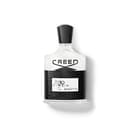
The house exists to make fragrance. Distribution is narrower, prices are usually higher, and the compositions are generally less concerned with pleasing everybody on the first sniff. Creed Aventus is the example this site covers most: a smoky pineapple-and-birch chypre from 2010 that the community reports at 7-9 hours, and in our September 17, 2026 price check it cost over $300.
Niche does not mean obscure. Aventus is one of the most famous fragrances in the hobby, famous enough to have launched a whole clone category. The word describes the business, not the level of fame.
Side by side, with the middle tier included:
| Designer | The blurry middle | Niche |
|---|
| Name on the bottle | A fashion or luxury brand | A designer name on a premium or exclusive line | A house whose main business is fragrance |
|---|
| Where you find it | Almost everywhere, often discounted | Department stores, at a premium | Far fewer stockists |
|---|
| Built for | A broad, fast first impression | Niche-style composition under a familiar name | The wearer over a full day |
|---|
| Examples on this site | Sauvage, Eros, Y, Acqua di Gio, Luna Rossa Carbon | Tom Ford Private Blend and Signature, Margiela Replica | Creed Aventus |
|---|
| Our Sept 17, 2026 price check | All five between $50 and $150 | Oud Wood, Tobacco Vanille and Ombré Leather each over $150 | Aventus over $300 |
|---|
The blurry middle
In practice, a lot of the most interesting fragrance on the market sits between the two.
Designer private and exclusive lines
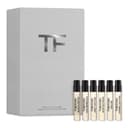
Tom Ford is the clearest case. Its Private Blend line — Oud Wood and Tobacco Vanille are both Private Blends, both from 2007 — is composed and priced like niche while carrying a designer name and sitting in department stores. The Signature line, with Ombré Leather as the example we cover, sits in the mid-premium bracket and is usually priced below the Private Blends. We call this tier niche-adjacent, and we say so wherever it appears on this site.
Niche-adjacent designer lines
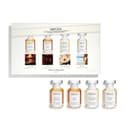
Maison Margiela’s Replica line puts a fashion house’s name on fragrance built around memories rather than note pyramids — a beach, a jazz bar, a fireplace. It carries a fashion name like a designer, but it is composed like niche and polarizing by design.
Modern indie houses
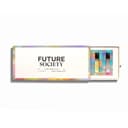
Then there is the newer wave of small independent houses. Future Society is the one we cover: clean, modern, unisex compositions rather than designer copies. By the definition above it is niche, but it has none of the shelf familiarity a famous name carries, which cuts both ways — nothing to fall back on, and nothing you have smelled a hundred times before.
The useful way to think about all of this is a spectrum rather than two boxes: mainstream designer, designer premium lines, established niche, indie. Where a bottle sits tells you roughly what you will pay. It tells you much less about what you will smell.
What the extra money buys, and what it doesn’t
Some of the niche premium is real. More expensive fragrance can afford better natural materials — real sandalwood, convincing suede and leather, genuine agarwood — and more careful blending, and the difference shows up most reliably in the dry-down, hours in, rather than in the opening. Smaller production runs also cost more per bottle, because a house selling far fewer bottles cannot spread its costs the way a designer selling in enormous volume can.
Some of it is positioning. The price is part of what is being sold, and past a point it stops changing the smell. What money does not reliably buy is longevity, projection or versatility; a well-made value-house eau de parfum can deliver all three.
Concentration is not quality
The most common assumption is that an expensive bottle must contain more fragrance oil. Concentration is a label for oil percentage, not a grade of quality, and it is largely independent of price. Four of the five designer examples above are eaux de toilette, and Club de Nuit Intense Man, an eau de toilette, is community-reported to outlast the eau de parfum Aventus it is modeled on. Our fragrance concentrations guide has the published oil percentages for each label.
Why niche often smells different
A designer launch has to sell in enormous volume, so it is built to be liked quickly by a lot of people — often on a paper strip, in a shop, in the first half minute. That is not a criticism; it is why Sauvage and Acqua di Gio are so easy to wear. It does mean the mainstream shelf clusters around a few safe templates: bright citrus over ambroxan, marine freshness, sweet mint and vanilla.
A niche house can afford to be liked by fewer people. That tends to show up as stranger openings, less sweetness and more unusual materials — oakmoss, incense, iris, animalic notes, genuinely dry woods — and as compositions that make more sense at hour four than at minute one. Aventus is the familiar example: smoky birch and a dry oakmoss-and-musk base under the pineapple, which is nothing like the fresh-blue designer template.
Two caveats. Plenty of niche is perfectly conventional, and plenty of designer is odd — Luna Rossa Carbon’s metallic facet is genuinely divisive. Different is not the same as better.
The performance myth
Niche is not automatically stronger, and it is worth dropping that assumption before you spend money on it. Tom Ford Oud Wood, the standard reference for approachable oud, is community-reported at 6-8 hours with moderate projection. Dior Sauvage, a designer eau de toilette, is community-reported at 8+ hours with strong projection. The more expensive bottle is the quieter one, and that is by design.
The value market makes the point more sharply. Club de Nuit Intense Man is community-reported at 10+ hours with enormous projection, arguably louder and longer than Creed Aventus, which the community reports at 7-9 hours. Aventus has its own well-known problem too: batch-to-batch variation that is notorious given what it costs.
If performance is what you are paying for, buy for concentration and scent family rather than for the niche label. Heavy amber and gourmand materials project at any price, and quiet woods stay quiet at any price.
Where clones fit
The clone market exists largely because of niche pricing. Cloning a mainstream designer saves you little; cloning a bottle that costs several hundred dollars saves real money, which is why Aventus and Tobacco Vanille are two of the most-copied references in the value market. In our September 17, 2026 price check, Aventus was over $300 and Club de Nuit Intense Man, the most-cited alternative to it, was under $50.
What a clone gives up is covered in our are cologne dupes worth it guide: a rougher opening, a simpler and shorter dry-down, and more variation between batches. The shape usually survives; the specific texture you fell for often does not. Some niche-adjacent fragrance has no convincing clone at all — the value market has not produced one of Oud Wood. Our dupes hub has every original we compare, with the closest alternatives to each.
Is niche for you?
Three signs it probably is. You are bored of the fresh-blue designer shelf and can name what bores you about it. You notice how a fragrance changes over the day, not just how it opens. And you will wear one bottle for years, which is where the cost per wear of an expensive bottle starts to make sense.
Three signs it probably is not. You want maximum projection for the money. You like the designers you already own and mostly want another one. Or you are buying mainly because the price suggests it must be better. There is no rule that says you have to move up the shelf, and plenty of people who try niche decide a good designer suits them better.
Either way, the answer should cost you a sample set rather than a bottle. Our niche discovery sets roundup ranks every option, and the four picks below are where we would start: three sample sets, then the niche benchmark itself. If you are still building the basics, the rest of our fragrance guides cover concentrations, testing and scent families.