Why Oud Wood has no real clone
Cloning is an economic activity, not a chemistry problem. A value house copies a fragrance when the copy will sell, and three features of Oud Wood make it a bad commercial target. Knowing them is also the fastest way to judge any bottle somebody markets to you as the Oud Wood dupe.
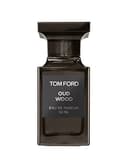
The oud is deliberately sanded down.Traditional agarwood reads medicinal, animalic, sometimes close to a barnyard. Oud Wood’s whole proposition was making that wearable for people who do not like oud: rosewood and cardamom up front, sandalwood smoothing the middle, vanilla and tonka rounding the end. A value house that has paid for an oud accord wants you to notice the oud, because that is what the label is selling. Restraint is the expensive part, and it is the first thing a copy drops.
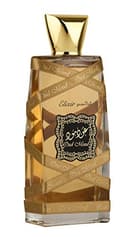
The structure is dry, not sweet. Almost every affordable oud on the market is built on the amber-vanilla-sweetness axis, because that is what the Gulf market rewards and what sells in the West. Oud Wood has vanilla and amber in the base, but the dominant impression is dry wood and spice. Of the five alternatives here, only Oud Mood Elixir aims at dryness, and even it is sweeter than the target.
Modest projection is a feature nobody clones.The community reports Oud Wood at six to eight hours with moderate projection — it is a scent that sits near you. Every alternative on this page is an eau de parfum reported at seven to ten hours with the kind of throw the value market advertises. You cannot buy a cheap bottle that whispers, because whispering does not move units at twenty-five dollars.
Put together: the thing you are paying Tom Ford for is subtraction. That is genuinely hard to copy cheaply, and it is why our registry entry for Oud Wood has carried the line “the value market has not produced a convincing clone of it” since the day it was written.
How to read the note overlap honestly
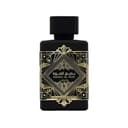
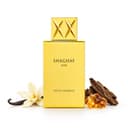
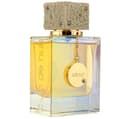
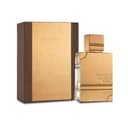
We count shared published notes on this page because it is the one comparison nobody can fudge: either the house prints a note or it does not. Oud Wood publishes nine — Brazilian rosewood, cardamom, Sichuan pepper, agarwood, sandalwood, vetiver, tonka bean, vanilla and amber. Against that list, Oud Mood Elixir shares four, Shaghaf Oud and Club de Nuit Oud share two each, Oud for Glory shares one, and Amber Oud Gold shares two — neither of which is a wood.
Two warnings about that arithmetic. First, note lists are marketing documents as much as formulas: houses publish what flatters the bottle, and a shared note name does not mean a shared material or a shared quantity. Second, overlap is not similarity. A bottle can share four notes and still smell nothing alike if the proportions differ, which is exactly why we rank Oud Mood Elixir as “closest in shape” and not as a clone.
Use it the way we do: as a floor, not a verdict. A bottle sharing one note with Oud Wood is definitely not a dupe. A bottle sharing four might be worth sampling.
Is the oud in any of these actually oud?
At these prices, almost certainly not in the sense people mean. Pure agarwood oil is one of the most expensive materials in perfumery, and a twenty-five-dollar 100 ml bottle cannot hold a meaningful amount of it. What you are smelling is a synthetic oud accord.
That is not a scandal, and it is not specific to the value houses. Most designer oud fragrances use the same accords, and synthetics are often more consistent than the natural material, which varies by tree, region and infection. It does mean the word “oud” on a label describes a style rather than a quantity of wood — which is how Amber Oud Gold can be named for it and publish no agarwood at all.
The cheapest way to answer this question properly
Four of the five alternatives here cost less than a restaurant meal, so blind-buying one is a reasonable gamble. Blind-buying four is how people end up owning a drawer of warm sweet ouds they do not wear.
If you are genuinely trying to work out whether you want oud in your rotation, an Arabian discovery set maps the category for the price of one full bottle, and the Tom Ford roundup covers the signature discovery set that lets you try Oud Wood itself in a sample rather than a 50 ml bottle. Our guide to testing before you buy covers the mechanics, and how long a bottle lasts does the cost-per-spray arithmetic that makes a 75 ml bottle comparable with a 100 ml one.
Prices in the buy buttons above come from our daily Amazon check and carry the date they were read. Where a bottle returns no live price you will see “check price on Amazon” rather than a number — we do not print a figure we cannot read on the day.