The short answer
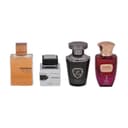
A decant is real fragrance in someone else’s bottle. Somebody buys a full-size bottle, transfers five or ten millilitres of it into a small glass atomizer, and sells that on. The liquid is genuine; the packaging, the seal and the chain of custody are not. That single sentence contains both the appeal and the entire risk.
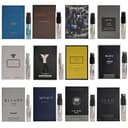
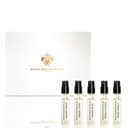
Decants are worth it in three specific situations: when a house sells no retail samples, when a fragrance is discontinued, and when you want enough of one expensive scent to wear it for a week before committing. Outside those, a sealed retail sample set is cheaper per fragrance tried and carries none of the provenance problem — which is why the picks further down this page are sets rather than decants.
What a decant is not
Three things get confused with each other constantly, and separating them is most of the value of this page.
- A decant is the genuine fragrance, moved into a different container. Nothing has been copied.
- A clone or dupe is a different fragrance, made by another house, composed to smell like a famous one. It is openly its own product with its own name, and we cover the whole category in our dupes section.
- A counterfeit is a fake pretending to be the original, including the branding. It is the only one of the three that is simply fraud, and it is the thing how to spot fake cologne is about.
The uncomfortable link between the first and the third is that a decant strips away every check you would use to detect the third. The standard counterfeit tells are all packaging: the carton print, the cellophane wrap, the batch code matching between box and bottle, the moulding of the glass, the weight and fit of the cap. Pour the liquid into a plain atomizer and none of those exist any more. A decant does not make a fake more likely; it makes one undetectable.
The four questions people actually ask
“Are decants watered down?”
The community consensus is that established decant sellers do not dilute — their whole business depends on repeat buyers who would notice. The real answer is less satisfying: you cannot check. A decant that smells weaker than you expected might be dilution, or an old bottle, or a reformulated batch, or simply your own skin chemistry on the day. With a sealed bottle you can eliminate three of those four. With a decant you cannot eliminate any of them, and if a fragrance is going to smell different on you anyway — which it genuinely will — that ambiguity undermines the test you were trying to run.
“Are decants legal?”
We are not going to answer that, because a fragrance site inventing a legal opinion is worse than no answer. What is documented is that brands actively control their distribution and pursue unauthorized sellers of genuine goods — Chanel’s selective distribution network is the best-reported example of it, and it is the same reason Chanel bottles are hard to buy cleanly on a marketplace at all. The practical point for a buyer is simply that a decant seller stands outside that system entirely. There is no brand-side recourse if something is wrong.
“Are decants already macerated?”
Usually, and this is the one genuine technical point in their favour. Maceration is the community-reported effect where a fragrance settles over the weeks after bottling and reads fuller afterwards — a fresh bottle can seem thinner than the same scent three months later. Because a decant comes out of a bottle that has already been open, it has generally had that time. Treat this as community consensus rather than a manufacturer specification, and treat the size of the effect as modest.
“Is a decant cheaper?”
It depends entirely on what you are counting. Per millilitre of one specific expensive fragrance, a decant is normally the cheapest route there is. Per fragrance tried, it is usually the most expensive, because a retail sample set gives you eight to twelve sealed scents for the price of one or two decants. If you already know exactly which bottle you are considering, the decant wins. If you are still working out whether you are a woody person or a gourmand person, it is the wrong tool and the set is far better value.
When a decant is genuinely the better buy
- The house sells no retail samples. Plenty of independent niche perfumers have no sampling programme and no presence on the marketplaces. If you want to try their work without buying a bottle, a decant may be the only route.
- The fragrance is discontinued or reformulated.Once a scent is off the shelves, the remaining supply is other people’s bottles. This is also the case where provenance risk is highest, so it cuts both ways.
- You want a week with it, not a sniff.Two millilitres is three or four wears. Ten millilitres is a fortnight, which is the only honest way to decide whether you want to spend several hundred dollars. A sealed 10 ml spray does the same job if one exists for the scent you want — which is why one is in the picks below.
What to check before you pay
If you decide a decant is right for your situation, the checks that are left are all about the seller rather than the bottle.
- A long, public trading history. Reputation is the only verification mechanism a decant has. A seller with years of feedback in an active community has something to lose; a new account does not.
- They state the source bottle and the batch. Good decanters volunteer which bottle a decant came from. Being vague about it is the clearest warning sign there is.
- Glass, not plastic, and a real atomizer. Plastic can interact with the fragrance over time, and a poor spray mechanism wastes an expensive liquid.
- A returns position in writing.You have no brand-side recourse, so the seller’s own policy is the entire protection you get.
And one thing to know whichever route you take: a decant you make yourself, from a bottle you own, has none of this risk. It is also worth doing sparingly rather than often — every opening of the parent bottle lets air in, which is the thing that actually degrades fragrance over time. Our storage guide explains why that matters more than most people expect.