Bergamot & Birch

Why Cologne Smells Different on You

Skin oil, moisture, temperature and what you ate all change what comes off your arm — which is why a bottle everyone recommends can smell wrong, and why a paper strip proves nothing.

By Stephen V.Last updated How we rank

How this is funded: we earn a commission if you buy through our links, at no extra cost to you. It never changes which cologne we recommend, and we’ll tell you plainly when we’d skip one. Full disclosure.

The short answer

A fragrance is not a smell. It is a set of volatile materials evaporating off a surface, in an order determined by how heavy each one is — and your skin is the surface. Change the surface and you change the evaporation: which notes lift first, how fast they go, which ones linger, and how loud the whole thing is at hour four. The liquid in the bottle is identical for everyone. What comes off the arm is not.

That is the entire mechanism, and it is worth stating plainly because the subject attracts a lot of mysticism. Nothing about your body changes the composition of the fragrance. What it changes is the rate and the balance, and over eight hours those two things add up to a genuinely different experience.

What actually varies between people

Skin oil

This is the big one. Fragrance materials dissolve into skin oil and release slowly from it, so oilier skin acts as a reservoir: base notes hold longer, project more and read richer. Dry skin has far less to hold on to, so the same bottle burns through its top notes quickly and can seem to disappear by lunchtime. If you have ever been told a fragrance is a ten-hour beast and found it gone in three, this is the most likely reason, and it is also why moisturising before you spray is the single most effective trick for making a scent last.

Moisture and dryness

Hydrated skin holds fragrance better than parched skin, which is why the same bottle behaves differently in a humid August and a dry, centrally heated January. Dry winter air also carries scent less far than humid air does, so a fragrance can feel quieter in cold weather even when it is lasting perfectly well on your skin.

Body temperature

Heat speeds up evaporation. People who run warm, and the warm spots on anyone’s body — the neck, the inside of the wrist, the chest — push fragrance outward faster and harder. This is the useful logic behind spraying pulse points, and it is also why the same two sprays that are perfect in an air-conditioned office become too much on a hot pavement. Our guide to applying cologne covers where to spray and how much.

What is already on your skin

Fragrance layers over whatever is there rather than replacing it: unscented or scented moisturiser, deodorant, soap residue, laundry detergent on your shirt collar, and your own natural scent. A strongly perfumed deodorant is the most common invisible culprit when a new bottle smells wrong in the first hour. If you want to know what a fragrance actually does on you, test it on skin that has had nothing but water and an unscented moisturiser.

Diet, hormones and medication

All three change your own baseline scent, and fragrance sits on top of that baseline. Heavily spiced food, garlic, alcohol and some medications are the ones people notice; hormonal shifts are real but harder to observe day to day. The honest framing is that these are modest effects compared with skin oil and temperature — worth knowing, not worth obsessing over. The practical takeaway is just to avoid judging a new bottle on an unusual day.

Why a paper strip tells you almost nothing

A blotter has no oil, no warmth and no skin chemistry. It will show you the top notes accurately and then mislead you about everything else, because the materials that matter most — the base, which you will be wearing for most of the day — need a warm, oily surface to behave normally. A fragrance that is beautiful on paper and flat on your wrist is extremely common, and the paper was the thing that was wrong.

The department-store version of this problem is worse, because it adds two more distortions. Smelling many fragrances in a row saturates your nose within about a minute, so everything after the second or third one is guesswork. And judging a bottle in its first ten minutes means judging the least representative part of it. If you have ten minutes in a store, the useful move is to spray one thing on skin, leave, and decide hours later.

What this means for buying

Three practical conclusions follow, and together they are the whole point of this page.

  • Recommendations are a shortlist, not an answer. When a thousand people online agree a bottle is excellent, that tells you the composition is good. It does not tell you how it will behave on your skin, and the gap between those two things is where almost all wasted money lives.
  • Performance complaints are often skin, not the bottle. Before deciding a fragrance is weak, consider that the people reporting ten hours may simply have oilier skin than you. Moisturise first, spray on pulse points, and re-test before writing it off.
  • The only test that counts is your skin, over hours, at full wear. Which means the cheapest sensible way to buy fragrance is not to buy fragrance first — it is to buy samples, and spend the bottle money only on something you have already worn through a whole day.

That last point is the one worth acting on, and it is why the picks below are sample sets rather than bottles. A box of vials costs a fraction of one designer purchase and it answers the only question this page has raised: what does this actually do on you?
Quick picks

Ranked on notes, concentration, community-reported performance and value. Select a row to jump to the full write-up. We haven’t wear-tested these — here is exactly what we do instead.

#FragranceBest forPrice
1
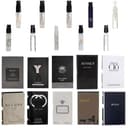
Sampler Set 10 Designer Fragrance Vials

Sampler Set 10 Designer Fragrance Vials

The best entry point on this whole site: ten popular designer vials in one box, so you can find what suits you before committing $80-plus to a full bottle. This is the single most useful thing a beginner can buy.

Best way to test on your own skin
$26.99 · View on Amazon

Price as of October 5, 2026. #ad How we’re funded

2
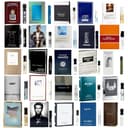
Infinite Scents Cologne Samples for Men, 12 Designer Brands

Infinite Scents Cologne Samples for Men, 12 Designer Brands

Twelve different designer houses in one box is the widest spread you can buy at this price, and breadth is exactly what a beginner needs. You are not trying to find your signature here — you are trying to rule out nine of the twelve as fast as possible.

Widest spread of houses
$32.99 · View on Amazon

Price as of October 5, 2026. #ad How we’re funded

3
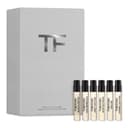
Tom Ford Signature Fragrance Discovery Set (6 samples)

Tom Ford Signature Fragrance Discovery Set (6 samples)

The best first step into the expensive end of the shelf. Six Tom Ford signatures — Black Orchid, Costa Azzurra, Grey Vetiver, Noir Extreme, Soleil Blanc and Ombre Leather — is a genuinely representative slice of what a niche-adjacent house smells like, for a fraction of one bottle.

Best for the expensive end
$78.24 · View on Amazon

Price as of October 5, 2026. #ad How we’re funded

The picks in full

#1Best way to test on your own skin

Sampler Set 10 Designer Fragrance Vials

The best entry point on this whole site: ten popular designer vials in one box, so you can find what suits you before committing $80-plus to a full bottle. This is the single most useful thing a beginner can buy.

What’s good

  • Try ten designer scents for the price of one bottle's shipping
  • The fastest, cheapest way to find your lane
  • Ideal gift for someone starting out

Who should skip it

  • Vials are small — a few wears each, not a season
  • Line-ups vary; check the current listing for what's inside
ConcentrationSample set
Scent familyAssorted designer
Key notesAssorted designer fragrances, Travel-size vials
Reported longevityVaries by vial
ForMen

The scent. A curated box of ten designer sample vials — buy the experience of trying before you spend on a full bottle.

Notes and concentration read from the product listing, on July 19, 2026. Reported performance is community consensus, not our own test.

#2Widest spread of houses

Infinite Scents Cologne Samples for Men, 12 Designer Brands

Twelve different designer houses in one box is the widest spread you can buy at this price, and breadth is exactly what a beginner needs. You are not trying to find your signature here — you are trying to rule out nine of the twelve as fast as possible.

What’s good

  • Twelve distinct houses — the widest range in this price bracket
  • Well suited to a structured 'one per day' testing week
  • Costs a fraction of a single designer bottle

Who should skip it

  • Sample sizes only — a few wears each, not a season
  • Brand line-up is set by the seller and can change
ConcentrationSample set
Scent familyAssorted designer
Key notes12 designer fragrance brands, Travel-size vials
Reported longevityVaries by vial
ForMen

The scent. Samples from twelve designer fragrance brands — maximum breadth for a first testing week.

Notes and concentration read from the product listing, on August 11, 2026. Reported performance is community consensus, not our own test.

#3Best for the expensive end

Tom Ford Signature Fragrance Discovery Set (6 samples)

The best first step into the expensive end of the shelf. Six Tom Ford signatures — Black Orchid, Costa Azzurra, Grey Vetiver, Noir Extreme, Soleil Blanc and Ombre Leather — is a genuinely representative slice of what a niche-adjacent house smells like, for a fraction of one bottle.

What’s good

  • Six named signatures, not an anonymous assortment
  • Spans smoky, marine, vetiver, sweet-spicy, solar and leather in one box
  • Costs a small fraction of a single full bottle from the house

Who should skip it

  • One house only — it tells you about Tom Ford, not about niche in general
  • Sample sizes; enough to decide, not enough to live with
ConcentrationSample set
Scent familyAssorted niche-adjacent
Key notesBlack Orchid, Costa Azzurra, Grey Vetiver, Noir Extreme, Soleil Blanc, Ombre Leather
Reported longevityVaries by vial
ForUnisex

The scent. Six Tom Ford signature samples across parfum, eau de parfum and eau de toilette, as listed on the current Amazon set.

Notes and concentration read from the product listing, on August 11, 2026. Reported performance is community consensus, not our own test.

How to run the test properly

A sample set only helps if you use it like an experiment rather than a tasting menu. Wear onefragrance per day, on skin, on a wrist or the inside of an elbow — two at most, one per arm. Spray it in the morning and then do not sniff it for four hours. The question you are answering is not “do I like this?” but “do I like this at hour four, in my clothes, in my life?” Most regret purchases are bottles that smelled wonderful for ten minutes.

Keep notes, even one line each. After a week you will usually find that your reactions cluster by family rather than by bottle — you are a dry-woods person who dislikes gourmands, or the reverse — and that is the genuinely useful finding, because it narrows a shelf of thousands to a shortlist of ten. Our scent families explained guide gives you the vocabulary for the pattern you find, and how to use a discovery set lays out the four-week version of this routine.

One more thing worth knowing before you spend: if a fragrance seems to vanish on you in an hour while everyone online reports eight, check the concentration on the box before you blame your skin. An eau de cologne and an eau de parfum of the same scent are different products with different oil loads, and the gap is large. Our concentrations guide is the two-minute version of that.

A note on sensitive skin. Fragrance is one of the most common causes of contact allergy. If your skin reacts easily, spray onto clothing rather than skin and patch-test a new scent on your inner arm first. Nothing here is medical advice.

Frequently asked questions

Why does cologne smell different on me than on someone else?

Because a fragrance is not a fixed smell — it is a set of materials evaporating off a surface, and your skin is the surface. How much oil your skin produces, how dry it is, how warm it runs and what is already on it all change the rate at which each material lifts off and how long each one lasts. Oily, warm skin tends to hold base notes longer and push them harder; dry skin burns through the top notes faster and can make the same bottle seem to disappear.

Does skin chemistry actually change a fragrance, or is that a myth?

It changes how the fragrance behaves, not what is in the bottle. The composition is identical; the evaporation is not. That distinction matters because it explains the real-world effect people notice — two people wearing the same scent smelling noticeably different at hour four — without claiming anything mystical. It is also why the fragrance community's standard advice is to judge a bottle by its dry-down on your own wrist rather than by anyone's description of it.

Can diet change how my cologne smells?

It can change what the fragrance is sitting on top of. Strongly aromatic foods, alcohol and heavy spice all affect your own natural scent, and fragrance layers over that rather than replacing it. The effect is usually modest and temporary, but it is real enough that the community recommends not judging a new bottle on a day when you have eaten or drunk something unusual.

Why does a cologne smell great in the store and wrong at home?

Usually one of three reasons. You smelled it on a paper strip, which has no oil, no warmth and no skin on it, so you only ever met the top notes. You smelled it next to twenty other fragrances, which saturates your nose within about a minute. Or you smelled it in the first ten minutes, which is the part of a fragrance least representative of what you will actually wear for the next eight hours.

Why can other people smell my cologne when I cannot?

That is a different effect from skin chemistry and it is almost universal: your nose adapts to a constant smell within an hour or two and stops registering it. This is the single most common reason people over-apply. We have a separate guide on it, and the practical rule is to trust the number of sprays rather than your own nose.

Will a fragrance smell the same on me in summer and winter?

No, and the difference is often large. Heat accelerates evaporation, so a fragrance projects harder and burns through faster in summer; cold air does the opposite, which is why heavy sweet bottles can read as muted in January and overwhelming in July. Humidity also carries scent further than dry air. This is why seasonal shortlists exist rather than one universal best-of list.

How do I find a fragrance that works on my skin?

Test several on your own wrists, one or two at a time, and judge them at the four-hour mark rather than the first spray. A sample set is the cheap structured way to do this — a box of ten vials costs less than one designer bottle and lets you rule out most of a scent family in a week. Buy the full bottle only for something you have worn through a whole day.

Sources

Keep reading