Bergamot & Birch

Where to Read Fragrance Reviews You Can Trust

Every source of cologne reviews has an incentive, including this one. Here is what each kind of site is actually good for, what it systematically gets wrong, and the three numbers you should never take at face value.

By Stephen V.Last updated How we rank

How this is funded: we earn a commission if you buy through our links, at no extra cost to you. It never changes which cologne we recommend, and we’ll tell you plainly when we’d skip one. Full disclosure.

The short answer

There is no single best fragrance review site, and anybody telling you otherwise is probably running one. What there is instead is five kinds of source, each good at a different job, and each with a predictable bias you can correct for once you know it is there.

If you want facts about a bottle— published notes, launch year, perfumer, concentration — use the community databases. If you want honest consensus on performance, use the enthusiast communities. If you want a description you can calibrate, a consistent video reviewer is genuinely useful. If you want to know whether a specific listing is legitimate, read the retailer reviews. And if you want a shortlist with prices, that is what sites like this one are for — which is also why this one has a commercial incentive, and we will come back to that.

The five kinds of source

1. Community databases

Fragrantica and Parfumo are the two large crowd-maintained references, and between them they hold published note pyramids, launch years, perfumer credits, olfactive classifications and an enormous volume of user reviews and ratings. They are the closest thing the category has to an encyclopedia, and when we label something on this site as community-reported, this is usually part of what we mean.

Good for: establishing what is in a bottle and what the brand says about it; finding out that a fragrance you are considering has four flankers with confusingly similar names; seeing the full range of opinion rather than one verdict.

Systematically weak at:aggregate scores. A rating average reflects whoever showed up, and fragrance enthusiasm skews toward the new and the discussed. Famous bottles collect both devotion and backlash, so a 3.8 can mean “divisive” rather than “mediocre.” Longevity and projection votes are the same problem in sharper form: they are thousands of different people’s skin, not a measurement.

2. Enthusiast communities and forums

Reddit’s r/fragrance and the clone-focused r/fragranceclones are where the practical questions get answered: does this actually last, is the cheap version any good, which batch is the good one, what should I buy for a wedding in August. When we cite a community consensus about a dupe-to-original likeness, this is where it comes from.

Good for: performance reality checks; dupe and clone comparisons, which no brand will ever publish; honest answers to narrow questions; spotting when a fragrance has been reformulated.

Systematically weak at:taste diversity. Any enthusiast community converges on a house style, and the bottles it recommends are the bottles it recommends — which is why the same half-dozen names appear in every thread. There are also hype cycles: a new value-house release gets described as a giant-killer for about four months and then quietly stops being mentioned. If a bottle is being praised everywhere this week, wait a season.

3. Video reviewers

Good for: description and calibration. Somebody who has smelled thousands of fragrances can place a new one against references you already know, which is more useful than any note list, and if you watch one reviewer consistently you learn to translate their taste into yours.

Systematically weak at: independence. Fragrance video is funded by sponsorship, affiliate links and gifted product, and that is simply the economics of the format rather than an accusation about any individual. Two practical corrections: prefer reviewers who disclose clearly, and weight criticism more heavily than praise, because criticism is the thing an incentive structure suppresses.

4. Retailer and marketplace reviews

Good for:one question — did the product arrive as described. Comments about packaging, batch codes, a bottle that smells wrong, a seller who shipped something else, or a fragrance that is obviously not what the label claims are the most valuable reviews on the internet, because they describe something the reviewer actually observed. For an expensive, heavily counterfeited bottle, this is where to look.

Systematically weak at:everything else. A one-star review saying “smells like my grandmother” is a report of a mismatch between a blind buy and a buyer, not information about quality. Verified-purchase ratings also skew high on cheap products and low on expensive ones, for reasons that have nothing to do with the fragrance. Our guide to spotting fakes covers what a counterfeit report should contain to be credible, and where to buy cologne covers which channels carry which risk.

5. Affiliate sites, including this one

Sites that rank and recommend products and earn a commission when you buy — a category this site belongs to. We are not going to review the competition, but we will tell you what to check, because the same checks apply to us.

Good for: a shortlist with prices attached, which nobody else provides; organizing a category so you can see the options; doing the legwork of comparing published specs.

Systematically weak at:saying no. A site that earns on purchases has a structural reason to recommend rather than to discourage, and the tell is uniform enthusiasm — a page where every pick is excellent and nothing is wrong for anybody is not a review, it is a catalog.

Our own incentive, stated plainly

We earn commission when you buy through our links. We earn nothing when you decide not to buy. That is a real bias and no amount of tone fixes it, so what we do instead is make the method checkable:

  • We do not own these bottles and we do not wear-test them. Every performance figure on this site is labeled community-reported, because it is.
  • Every spec traces to a dated source.Notes, concentration, launch year and perfumer come from a published listing or brand page, read on a recorded date, cited at the bottom of the page. Where something is not published, we print “not published” rather than a guess.
  • Prices come from a live daily check, never typed in.If the check fails or a bottle has no buyable offer, the price disappears and the button says “check price” — the failure mode is silence rather than a stale number.
  • We say who each bottle is wrong for.Every pick on this site carries a “check before you buy” line, and several of our pages exist mainly to talk somebody out of a purchase.
  • There are no star ratings and no awards. We have not tested anything in a lab, so we do not publish scores that imply we have.

The long version is on how we rank, the money arrangement is on how we make money, and the rules we hold ourselves to are in our editorial policy. If you want to apply the same three questions to any other site — does it disclose, does it ever say no, does it cite — you will sort the category quickly.

Three claims to distrust everywhere

A single longevity number.“Lasts 9 hours” is not a property of a fragrance, it is a property of a fragrance on a person. Dry skin, heat, humidity, dose and application site all move it, and the honest version is always a range plus whose range it is. Why cologne smells different on you explains the mechanism, and sillage, projection and longevity separates the three things people confuse when making these claims.

A note list treated as a description.Published pyramids are partly marketing. A listed note may be present in trace amounts, may be an accord rather than a material, and tells you nothing about proportion — which is what actually decides how something smells. Two fragrances can share five notes and smell unrelated. Fragrance notes explained covers how to read one without being misled.

“Smells exactly like” a famous bottle. Dupe comparisons are the most exaggerated claims in the category, in both directions. The honest formulation is that a community reports a likeness, with how much agreement, and the useful detail is usually which partresembles the original — many cheap alternatives nail an opening and diverge completely in the dry-down. That is how we write every dupe page here; the argument is in are cologne dupes worth it.
Quick picks

Ranked on notes, concentration, community-reported performance and value. Select a row to jump to the full write-up. We haven’t wear-tested these — here is exactly what we do instead.

#FragranceBest forPrice
1
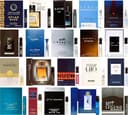
Sampler Set 10 Designer Fragrance Vials

Sampler Set 10 Designer Fragrance Vials

The best entry point on this whole site: ten popular designer vials in one box, so you can find what suits you before committing $80-plus to a full bottle. This is the single most useful thing a beginner can buy.

Best spread to test
$26.99 · View on Amazon

Price as of October 18, 2026. #ad How we’re funded

2
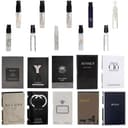
Sampler Set 8 Designer Cologne Samples

Sampler Set 8 Designer Cologne Samples

The cheapest honest way to start. Eight designer vials for less than the price of a single restaurant meal, which is roughly what it costs to find out whether you are a fresh person, a sweet person or a woody person before you spend real money.

Cheapest first step
$21.95 · View on Amazon

Price as of October 18, 2026. #ad How we’re funded

3
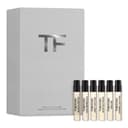
Tom Ford Signature Fragrance Discovery Set (6 samples)

Tom Ford Signature Fragrance Discovery Set (6 samples)

The best first step into the expensive end of the shelf. Six Tom Ford signatures — Black Orchid, Costa Azzurra, Grey Vetiver, Noir Extreme, Soleil Blanc and Ombre Leather — is a genuinely representative slice of what a niche-adjacent house smells like, for a fraction of one bottle.

Best for the expensive shortlist
$79.98 · View on Amazon

Price as of October 18, 2026. #ad How we’re funded

The picks in full

#1Best spread to test

Sampler Set 10 Designer Fragrance Vials

The best entry point on this whole site: ten popular designer vials in one box, so you can find what suits you before committing $80-plus to a full bottle. This is the single most useful thing a beginner can buy.

What’s good

  • Try ten designer scents for the price of one bottle's shipping
  • The fastest, cheapest way to find your lane
  • Ideal gift for someone starting out

Who should skip it

  • Vials are small — a few wears each, not a season
  • Line-ups vary; check the current listing for what's inside
ConcentrationSample set
Scent familyAssorted designer
Key notesAssorted designer fragrances, Travel-size vials
Reported longevityVaries by vial
ForMen

The scent. A curated box of ten designer sample vials — buy the experience of trying before you spend on a full bottle.

Notes and concentration read from the product listing, on July 19, 2026. Reported performance is community consensus, not our own test.

#2Cheapest first step

Sampler Set 8 Designer Cologne Samples

The cheapest honest way to start. Eight designer vials for less than the price of a single restaurant meal, which is roughly what it costs to find out whether you are a fresh person, a sweet person or a woody person before you spend real money.

What’s good

  • The least you can spend and still learn something useful about your taste
  • Eight vials is enough range to cover the main directions
  • Small enough to keep in a bag or a desk drawer

Who should skip it

  • Fewer vials than the bigger sets, and less premium packaging
  • Line-up depends on the current listing — check before ordering
ConcentrationSample set
Scent familyAssorted designer
Key notes8 designer cologne samples, Mini fragrance vials
Reported longevityVaries by vial
ForMen

The scent. Eight designer cologne samples in mini vials — the cheapest structured way to try before you buy.

Notes and concentration read from the product listing, on August 11, 2026. Reported performance is community consensus, not our own test.

#3Best for the expensive shortlist

Tom Ford Signature Fragrance Discovery Set (6 samples)

The best first step into the expensive end of the shelf. Six Tom Ford signatures — Black Orchid, Costa Azzurra, Grey Vetiver, Noir Extreme, Soleil Blanc and Ombre Leather — is a genuinely representative slice of what a niche-adjacent house smells like, for a fraction of one bottle.

What’s good

  • Six named signatures, not an anonymous assortment
  • Spans smoky, marine, vetiver, sweet-spicy, solar and leather in one box
  • Costs a small fraction of a single full bottle from the house

Who should skip it

  • One house only — it tells you about Tom Ford, not about niche in general
  • Sample sizes; enough to decide, not enough to live with
ConcentrationSample set
Scent familyAssorted niche-adjacent
Key notesBlack Orchid, Costa Azzurra, Grey Vetiver, Noir Extreme, Soleil Blanc, Ombre Leather
Reported longevityVaries by vial
ForUnisex

The scent. Six Tom Ford signature samples across parfum, eau de parfum and eau de toilette, as listed on the current Amazon set.

Notes and concentration read from the product listing, on August 11, 2026. Reported performance is community consensus, not our own test.

Why a sample set is the end of this page

A page about reviews ought to be honest about the limits of reading, and the limit is this: no review can tell you how a fragrance behaves on your skin, because that is a property of the two things together. Skin chemistry genuinely changes the outcome, and it is the single most common reason somebody loves a bottle everybody else calls average, or finds a universally praised fragrance disappears on them in an hour.

Which is why the most useful thing you can buy after an afternoon of research is not a bottle but a set of small vials. The ten-vial box gives you the widest spread of designer scents to test cheaply. The eight-vial box is the lowest-cost structured way to start if you have never worn fragrance at all. And the Tom Ford discovery set is the one to reach for if the bottles on your shortlist are the expensive ones — six samples cost a fraction of a Private Blend, and finding out you dislike one is the single best return available in this category.

Use them properly rather than smelling all of them in one sitting: one fragrance a day, on skin rather than paper, and write down what you thought at the four-hour mark rather than the four-minute mark. Our guide to using a discovery set sets out the method, and how to test cologne before you buy covers the mistakes that make a test worthless.

Prices in the buy buttons above come from our own daily Amazon check and carry the date they were read. Where a set returns no live price, the button says “check price on Amazon” rather than showing a number — we do not print a figure we cannot read on the day. The full method is on how we rank.

Frequently asked questions

What is the best fragrance review site?

There is no single best one, because the sources are good at different things. For published note pyramids and a large volume of user impressions, the community databases — Fragrantica and Parfumo — are the standard references. For honest consensus on how a fragrance actually performs and whether a cheap alternative is any good, the enthusiast communities on Reddit are better. For 'what should I buy', every source including this one has a commercial or social incentive, so treat conclusions as starting points rather than answers.

Is Fragrantica reliable?

It is reliable for what it is: the largest community-maintained fragrance database, with published note lists, launch years, perfumer credits and a very large number of user reviews and ratings. That makes it the best available reference for facts about a bottle. What it is not is a controlled test — ratings reflect the taste and enthusiasm of whoever turned up, popular bottles accumulate both devoted fans and backlash, and longevity reports are people's own skin rather than measurements. Use it for facts, read the reviews for range rather than verdict.

Can I trust YouTube cologne reviewers?

Often yes on description, more carefully on recommendation. A reviewer who has smelled thousands of bottles is genuinely useful for placing a new release against things you already know, and the good ones are consistent enough that you can learn to calibrate against their taste. The structural problem is that fragrance video is a sponsorship-funded format, and brand relationships, gifted bottles and affiliate links are common. Look for disclosure, and weight criticism more heavily than praise.

Are Amazon reviews useful for cologne?

For one question only: did the bottle arrive as described. Reviews mentioning packaging, batch codes, a scent that smells wrong or a seller problem are genuinely informative, because those are things a buyer can observe. Reviews of whether a fragrance is good are close to useless — people who blind-bought something they turned out to dislike rate it one star, which tells you about the mismatch rather than the bottle. Counterfeit reports in the reviews are worth reading carefully.

Why do longevity claims vary so much between reviews?

Because longevity is a property of the fragrance and your skin together, not of the fragrance alone. The same bottle can honestly last four hours on one person and ten on another, and dry skin, humidity, temperature, where you sprayed and how many sprays all move the figure. This is why we label every longevity figure on this site as community-reported: the useful information is the range and the consensus shape, not a single number.

How do I tell if a cologne review site is just selling me something?

Look for three things. Does it disclose that it earns commission, clearly, where you can find it rather than buried? Does it ever say a product is wrong for you, or does everything get recommended? And does it tell you where its facts came from — a published note list, a brand page, a dated price check — or does it simply assert them? A site that never criticizes anything and never cites anything is a catalog with opinions attached.

Does this site have an incentive too?

Yes, and it would be absurd to pretend otherwise. We earn commission when you buy through our links, which means we make money when you buy and nothing when you do not. We handle that by being explicit about method rather than claiming to be neutral: we do not own the bottles, we do not wear-test, every spec traces to a published source with a date, every price comes from a live daily check rather than being typed in, and we say which bottles are wrong for which buyer. Our how-we-rank page and affiliate disclosure set that out in full.

What is the only reliable fragrance review?

Your own, on your own skin, over more than one day. Everything you read is somebody else's chemistry and somebody else's taste, which is why reviews are good for narrowing a shortlist and bad for making a final decision. The cheap version of testing properly is a sample set: eight to twelve fragrances for a fraction of one bottle, worn for a day each. That is the step that saves money, not more reading.

Sources

Keep reading