How we chose these seven
1. It had to change the market, not just sell well
Selling in enormous quantities is not the same as mattering. The test we used is whether the fragrance industry visibly reorganized itself around a bottle in the years after it launched. Cool Water produced a decade of aquatics. Le Male made sweetness acceptable on men. Aventus created the entire modern clone economy. Sauvage made ambroxan the default base note of a generation. Each of those is a before-and-after line you can point to on a shelf.
2. It has to still be buyable, and still be good
Every pick was confirmed in stock with a live price. Just as importantly, each one still holds up on its own terms rather than purely as a historical artifact — we have not included anything you would only wear ironically. Where a fragrance has become dated, we say so in its entry rather than pretending the passage of time did not happen.
3. Reformulation, handled honestly
This is the awkward part of any classics list. Fragrances from the 1980s and 1990s have almost all been reformulated, usually because IFRA restrictions removed or limited materials that were freely used at the time — oakmoss being the famous example. The community consensus is that Cool Water and Acqua di Gio in particular are lighter than their original versions. We have not claimed to compare vintage bottles against current ones, because we do not own vintage bottles. What we can tell you is that both current formulations are still very good, and that anyone selling you a “vintage batch” on a marketplace is selling you a claim you cannot verify.
4. Spread across decades and families
One aquatic pioneer, one aquatic perfecter, one gourmand, one spicy fougère, one fruity chypre, one woody-spicy everyday and one ambroxan monolith. Seven bottles that between them cover most of what the men’s market has done since 1988.
A short history, in seven bottles
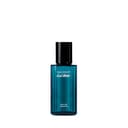
1988 — Davidoff Cool Water
The one that started it. Before Cool Water, men’s fragrance was largely powdery, mossy and heavy. Cool Water introduced the calone marine accord to the mass market and made “fresh” the default expectation, and it is directly responsible for essentially every blue bottle sold since. It is also, still, one of the best value purchases in fragrance.
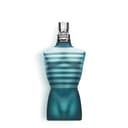
1995 — Jean Paul Gaultier Le Male
Mint and lavender over vanilla, in a torso-shaped bottle, in 1995. Nobody expected a sweet fragrance to sell to men and it has sold continuously for thirty years. Every gourmand on our vanilla roundup is downstream of it. Our full review covers whether the Elixir flanker is now the one to buy instead.
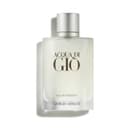
1996 — Giorgio Armani Acqua di Gio
Cool Water proved the aquatic could sell; Acqua di Gio perfected it. Marine, citrus and jasmine over patchouli, and for roughly fifteen years it was the best-selling men’s fragrance on earth. It is our most-influential pick because more fragrances have been built to resemble it than any other on this page except Aventus.
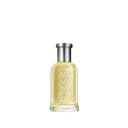
1998 — Hugo Boss Boss Bottled
Apple, cinnamon and sandalwood: the office fragrance, invented. It has been quietly on the counter for nearly thirty years without ever being fashionable, which is exactly the point of it. If you want a single bottle that has never been wrong in a professional setting, this is it — and it also appears on our fall roundup for the same warm-dry reasons.
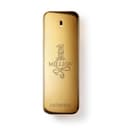
2008 — Paco Rabanne 1 Million
The loudest fragrance of its decade and the most imitated. Grapefruit and cinnamon over leather and amber, in a gold bar. It has aged into something of a punchline in enthusiast circles and it is still excellent at the job it was built for, which was being noticed.
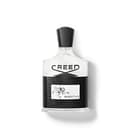
2010 — Creed Aventus
Pineapple and birch smoke, and the single most consequential launch of the modern era. Aventus created the idea of niche fragrance as status object, and then created the clone market that undercuts it — our Aventus dupes comparison covers how close the cheap versions actually get, and our head-to-head takes the closest one on directly.
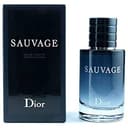
2015 — Dior Sauvage
The defining fragrance of the last decade, and the reason ambroxan is in almost everything now. Bergamot and pepper over an ambroxan base that is loud, clean and almost impossible to dislike. Its ubiquity is its only genuine flaw — see our review for the honest version.
What a classic is worth today
Here is the part that is actually useful. Two of these seven — Cool Water and Boss Bottled — cost less than most value-house releases, because their patents on novelty expired decades ago and the market moved on. They are not worse fragrances than they were in 1998. They are simply not new, and newness is most of what a fragrance price reflects.
The two most expensive picks here, Aventus and Sauvage, are the two with the most credible cheap alternatives, which is not a coincidence: the clone market goes where the demand is. If you want the shape of those two without the price, our best under $50 list runs the cost-per-spray math, and our are dupes worth it guide covers what a twenty-five-dollar bottle gives up to hit that price.
Do classics still work in 2026?
Mostly, with two caveats worth stating plainly. The first is saturation: Sauvage and Acqua di Gio are so widely worn that they no longer function as personal signatures, which is a real cost if that is what you wanted from a fragrance. The second is that the 2008-era sweet powerhouses — 1 Million most obviously — read as distinctly of their moment now, in the way a particular cut of jeans does.
What has not aged is the middle of this list. Boss Bottled, Le Male and Cool Water all still smell like well-made fragrances rather than like period pieces, and all three cost less than a modern designer release. If you want somewhere to start, start there — and if you would rather test four of these on your own skin before buying any, a designer sample set covers most of this page for less than one bottle.