The short answer
A cologne subscription is worth it for one kind of buyer: somebody who has no idea what they like, wants a different fragrance every month, and would rather pay a premium than make a decision. If that is you, it works, and the month-to-month commitment is genuinely low.
For everybody else, the arithmetic is poor, and the interesting part is that you can check it yourself using numbers both sides publish. Here is the whole case in one paragraph: a subscription sends you 8 ml a month. A fragrance-packaging manufacturer publishes a typical atomizer dispense of about 0.10 ml per spray. That makes 8 ml worth roughly 80 sprays — which at four sprays a day is about twenty days, not thirty.
The published numbers, side by side
We are going to use Scentbird for the figures because it is the largest service of its kind, it has been running since 2013, and it publishes its terms plainly on its own homepage. These were read on October 11, 2026. Subscription pricing moves, so treat them as dated rather than current.
| Published figure | What the source says | Who published it |
|---|
| Vial size | An “8mL vial that lasts 30 days” | The service |
|---|
| Claimed sprays | “120 sprays = 30 days (4 sprays daily)” | The service |
|---|
| Price | “$8.97 your first month, then $17.95 each month” | The service |
|---|
| Catalog and terms | “Over 1100 scents, free shipping, cancel anytime” | The service |
|---|
| Actual spray volume | About 0.10 ml per spray, ranging 0.08–0.12 ml by brand | A fragrance-packaging manufacturer |
|---|
| Sprays in 8 ml at that rate | 67 to 100— i.e. 17 to 25 days at four a day | Our arithmetic, from the figures above |
|---|
Where the spray count comes apart
The 120-spray claim is not dishonest, but it rests on an assumption worth surfacing. For 8 ml to deliver 120 sprays, each spray has to be about 0.067 ml. The packaging manufacturer — a company that makes the atomizers — publishes a typical dispense of 0.10 ml, with a range of 0.08 to 0.12 ml depending on the brand.
So the subscription’s own figure sits below the bottom of the published industry range. That is possible — a smaller pump on a travel atomizer is a real thing, and nothing here says the claim is false. It does mean the thirty-day promise depends on a smaller-than-typical spray, and that if the vial you receive behaves like a normal atomizer, you will run out somewhere in week three.
There is a second, quieter assumption too: four sprays a day. Four is a reasonable dose for a light eau de toilette and too many for a parfum, where two is plenty. If the month’s fragrance happens to be a strong eau de parfum you will use less and the vial will last longer — which is good news for the arithmetic and bad news for the comparison, because the fragrances where you need the most volume are the light ones. The same arithmetic applied to full bottles is in how long a bottle of cologne lasts, and fragrance concentrations explained covers why strength changes the dose.
The annual cost, and what it is buying
At the published prices, a year is about $215: $8.97 for the first month and $17.95 for the eleven after it. For that you receive twelve 8 ml vials — roughly 96 ml of fragrance, or slightly less than one standard 100 ml bottle, spread across twelve different scents.
That comparison is the honest way to frame it, and it cuts both ways. Per milliliter, it is expensive: you are paying a full designer bottle’s worth of money for a bottle’s worth of volume, with none of it in the same fragrance. Against that, twelve different compositions in a year is a genuinely different product from one bottle, and if trying things is the actual goal then price per milliliter is the wrong metric.
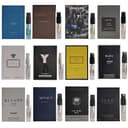
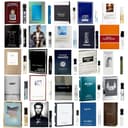
The real comparison is not against a bottle at all. It is against buying a sample set outright, which answers the same question — what do I like? — for a small fraction of a year’s subscription, with no recurring charge and no schedule. That is the case we make in are sample sets worth it, and the picks below are where we would put the money.
What a subscription is genuinely good at
Three things, and we would not pretend otherwise.
Volume per fragrance.Eight milliliters is enough to wear something properly for weeks — through different weather, different rooms, different moods — which a 2 ml sample vial is not. There is a real difference between smelling a fragrance and living with it, and this is the format that lets you do the second cheaply. Our guide to testing before you buy explains why that distinction matters more than people expect.
Catalog breadth.Over a thousand scents, by the service’s own claim, including plenty that no sealed sample set on a marketplace will ever contain. If you want to try a specific niche bottle without paying niche prices, this is a reasonable route to it.
Removing the decision. Not a trivial benefit. Fragrance shopping is genuinely overwhelming, and a parcel that turns up with something chosen for you solves a problem that a shelf full of options does not.
Who should skip it
Anybody who already knows what they like. If you own two fragrances you reach for happily, a subscription is an expensive way to receive things you will not wear. Buy the bottle.
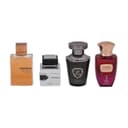
Anybody shopping on cost. The value-house market solves the cheap-fragrance problem far better. A single full bottle from the Arabian originals shelf or under $50 costs a month or two of subscription and gives you 100 ml rather than 8 ml. If the goal is smelling good for the least money, that is the answer.
Anybody who wants to compare fragrances properly. One vial a month makes side-by-side comparison impossible. You need two fragrances on two wrists in the same hour to learn anything, which is what a multi-vial set is for.
Anybody who forgets recurring charges.The published terms advertise skip and cancel at any time, which is good — but a subscription you forget to skip is the most expensive fragrance purchase in this whole category.