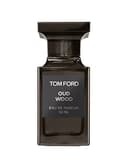
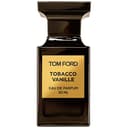
Oud Wood vs Tobacco Vanille side by side
The notes below are the pyramids Tom Ford publishes for each bottle, read from the brand’s own fragrance pages. Performance is labeled community-reported throughout, because we have not measured it. The price bands are what a live Amazon check returned on October 5, 2026; the current figures are in the buy buttons above.
| Oud Wood (EDP) | Tobacco Vanille (EDP) |
|---|
| Launched | 2007, Private Blend | 2007, Private Blend |
|---|
| Published key notes | Brazilian rosewood, cardamom, Sichuan pepper, agarwood, sandalwood, vetiver, tonka bean, vanilla, amber | Tobacco leaf, spices, vanilla, cacao, tonka bean, tobacco blossom, dried fruits, woods |
|---|
| Character | Dry, smooth, quietly formal — polished wood | Rich, sweet, slow and opulent — a pipe shop |
|---|
| Reported longevity | 6–8 hours, moderate projection (community-reported) | 10+ hours (community-reported) |
|---|
| Best season | Autumn and winter; wearable in spring | Cold weather only — genuinely unwearable in heat |
|---|
| Best occasion | Work, dinners, formal daytime, cold evenings | Cold evenings where being noticed is the point |
|---|
| Office? | Yes — one of very few Private Blends that is | No |
|---|
| Is there a convincing clone? | No. The value market has not produced one | Yes — the published pyramids line up almost note for note |
|---|
| Price band (Oct 5, 2026 check) | Under $175 | Just over $200 — the dearer of the two on the day |
|---|
What each one actually smells like
Oud Wood: oud with the difficulty removed
Tom Ford publishes Oud Wood as rosewood, cardamom and Sichuan pepper over a heart of agarwood and sandalwood, landing on tonka bean, vanilla and amber. What that composition does is take a material most Western buyers find hard — traditional oud is medicinal, animalic and divisive — and sand it down into something smooth and dry. The pepper and cardamom give the opening a brief lift, then the whole thing settles into a warm, woody, faintly sweet polish that stays near the skin.
That restraint is the entire point and also the entire criticism. It is why Oud Wood works in an office and at a dinner table, and it is why people who genuinely love oud call it timid. If you have never worn an oud fragrance, this is the correct place to start. If you have worn several and wanted more of the raw material, you will find this one polite.
Tobacco Vanille: the reference, and the loudest one
The published pyramid is tobacco leaf and spice over vanilla, cacao, tonka bean and tobacco blossom, with dried fruits and woods underneath. It was composed by Olivier Gillotin and released in 2007, and it has not meaningfully dated in the nineteen years since — which is rare, and part of why it still sells at full price.
In wear it is slow and dense. The tobacco is sweet pipe tobacco rather than ash or cigarette, the cacao keeps it from being a plain vanilla, and the dried fruit underneath is what makes people describe it as opulent. The community reports ten hours and up from a small application, and that figure is the practical warning as much as the selling point: this is a fragrance you commit to for a day. Two sprays is the ceiling, and in a warm room one is closer to right.
The thing that actually decides it
Not the notes — the volume. These two bottles ask for different behaviour from you. Oud Wood is a fragrance that rewards wearing it often, in rooms with other people in them, without thinking about it. Tobacco Vanille is a fragrance you choose deliberately on a cold evening and then live inside for ten hours. Buy the one that matches how you actually intend to use an expensive bottle, because the smell is not the constraint here; the projection is.
The clone situation is completely different
This is the part of the comparison that should change your spending, and it is the part most write-ups skip. Tobacco Vanille is the single most-cloned fragrance in the value market, and the best of those clones publishes a pyramid that maps onto it almost note for note — tobacco leaf and spice over vanilla, tonka, cocoa and tobacco blossom, into dried fruits and woods. It cost roughly a tenth of the Tom Ford on the day we checked, which is about what a Private Blend sample vial costs. The community’s honest caveat is that the opening is rougher and spicier and the vanilla less creamy; the gap narrows considerably after twenty minutes. We go through the whole shelf on our Tobacco Vanille dupes page.
Oud Wood has no equivalent. The value market has not produced a convincing clone of it, and the reason is structural rather than accidental: a smooth, dry, low-projection wood is a harder thing to fake cheaply than a loud sweet gourmand, because there is nowhere for a rough synthetic to hide. The practical conclusion is uncomfortable but clear. If you want the Tobacco Vanille smell, you have a genuine cheap route and you should try it first. If you want the Oud Wood smell, the bottle is the only way to get it — which is an argument for buying it and against buying the other one blind.
If neither is right: the third Tom Ford
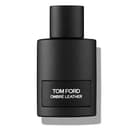
A real share of people reading this will find Oud Wood too quiet and Tobacco Vanille too sweet. Ombré Leather is the bottle for that reaction: a 2018 Signature-line eau de parfum built on cardamom, leather and jasmine sambac over amber, moss and patchouli. It is suede-soft rather than tarry, it reads adult and deliberate, and the community reports seven to nine hours. It is also the most polarizing of the three, because leather is a note people either reach for or avoid entirely.
We put it directly against Oud Wood in Oud Wood vs Ombré Leather, which is the page to read if those two are your finalists. And if you are at the start of this decision rather than the end of it, the cheapest sensible move is not to buy any of the three: the Tom Ford roundup explains the Signature-versus-Private-Blend split across the whole house, and a discovery set of the Signature line costs a fraction of one bottle.