The oud problem
Here is the whole finding in one sentence: the house that built its identity on traceable agarwood sells, on the largest retailer in the United States, four bottles that contain no agarwood.
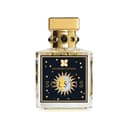
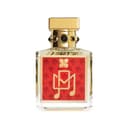
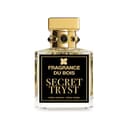
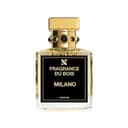
We read all four published pyramids on the brand’s own site the day this page was written. PM is tuberose, juniper berry, cardamom and Menton lemon over Indonesian patchouli, Italian leather, cedarwood and orris root, onto labdanum, benzoin and amber. Solstis is apple, mandarin, bergamot and pink pepper over nutmeg, neroli, pepper and cardamom, onto sandalwood, vanilla and vetiver. Secret Tryst is bergamot, saffron and Indian cardamom over rose, jasmine, cedarwood and vetiver, onto patchouli, frankincense, cistus and vanilla. Milano is saffron, thyme, bergamot and orange over olibanum, jasmine and fruity notes, onto leather, musk, amber, vanilla and a woody accord.
Four pyramids, forty-odd published materials, zero mentions of oud. The oud bottles exist — Rude Oud is one of the five best sellers on the house’s own storefront, and the Shades Du Bois collection of eight perfumes is where the agarwood reputation comes from — but Amazon does not carry them. A live search for the house’s signature oud names returns clone-house renditions and unrelated brands, not the originals.
This matters because of how people find this house. Almost nobody searches “Fragrance Du Bois” because they want a leather amber; they search it because they read that there is a brand doing certified sustainable oud and they want to know whether it is worth it. The honest answer for that reader is that the bottles they want are not on the shelf they are standing in front of.
What this house publishes, and what it refuses to
The brand publishes a full top-heart-base pyramid for every product, which is more than some designer houses manage. It does not publish a concentration, a launch year, or a perfumer credit on the product pages we read. For three of the four bottles here it does not publish a scent family either; PM is the exception, filed as leathery amber.
The word “Parfum” or “Extrait de Parfum” on each of our table rows comes from the Amazon listing title, which is the only place in the chain where a concentration is stated at all. We are reporting that label; we are not treating it as a verified percentage. If you want to know what those words are actually supposed to mean, our fragrance concentrations guide covers the real ranges and why the label on the box is a weaker promise than most people assume.
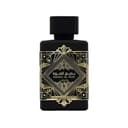
It is worth sitting with the comparison. A twenty-dollar Lattafa publishes its notes, its concentration, its launch year and often its inspiration, and has thousands of community wear reports behind it. A bottle from this house, listed in the same band as a Creed Aventus, publishes a pyramid and nothing else. That is not a reason never to buy niche. It is a reason to know exactly what you are buying on faith.
Supply is the real risk here
Five listings for an entire house, all of them in single-digit units, is not a distribution network — it is a handful of units moving through third-party sellers. We have seen what happens next on this site repeatedly: a listing goes dead, and any page pointing at it sends readers to an error.
Two things follow. First, we registered only the four listings with more than one unit left, and we left the single-unit one out entirely. Second, every buy button on this site falls back to a tagged Amazon search when a listing dies, so the worst case is that you land on a search results page rather than a 404. Our daily price check re-reads every ASIN we carry, and when one stops returning stock it gets repointed or retired.
Practically, if you want one of these four, buy it when you see it rather than bookmarking it. That is not a sales tactic; it is what single-digit stock at a thinly distributed house means.
Where to buy it — including the option that pays us nothing
The house sells directly from its own storefront, in pounds, and that store carries the entire range including the oud bottles Amazon does not. If you are spending at this level, price the brand’s own listing against the Amazon one before you commit, and factor in shipping and any duty to your country.
We earn nothing if you buy direct. We are telling you to check anyway, for the same reason we tell readers to buy the twenty-dollar clone when the clone is the better purchase: the whole value of a page like this collapses if the recommendation is shaped by which link pays. Our where to buy cologneguide covers the trade-offs between a brand’s own store, the big marketplaces and the discounters, and whether the fragrance discounters are legitimate explains the gray-market mechanics behind the prices that look too good.
Who should actually buy this house
Buy it if you already know you like one of these specific structures, you have the budget for a bottle you cannot sample first, and the sourcing story is worth something to you on its own terms. The certified-plantation claim is real, it is documented, and the agarwood supply chain is bad enough that paying a premium to stay out of it is a defensible decision.
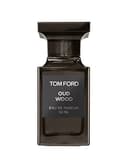
Skip it if you are shopping for oud and this house came up first. There is a well-mapped ladder in that family and this is not the bottom rung of it: Tom Ford Oud Wood is the reference, our oud roundup ranks the full shelf from a twenty-dollar Lattafa upward, and the Arabian originals covers the Middle Eastern houses that are not copying anybody. Find out whether you like agarwood on a value-house bottle before you commit at the niche level.
And skip it if what you actually want is a safe everyday signature. Nothing in this range is that. The two leather bottles are evening scents, Secret Tryst is polarizing by construction, and Solstis — the most wearable of the four — is a shape you can buy for a small fraction of the price from the under-$100 shelf with a decade of community data behind it.