Bergamot & Birch

Are Fragrance Discounters Legit?

FragranceNet, FragranceX and the rest sell genuine bottles at prices department stores do not. Here is the mechanism that makes that possible, what the discount is measured against, and the four things that actually go wrong.

By Stephen V.Last updated How we rank

How this is funded: we earn a commission if you buy through our links, at no extra cost to you. It never changes which cologne we recommend, and we’ll tell you plainly when we’d skip one. Full disclosure.

Yes, the established online fragrance discounters are legitimate businesses selling genuine product — and the reason they are cheap is the gray market, not counterfeiting. They buy stock outside the brand’s authorized distribution chain and they sell tester and unboxed units, both of which are real juice in plainer packaging. If what you want is the cheapest honest route to a specific designer bottle for your own use, a discounter is usually it.

The caveats are not about authenticity. They are that the headline discount is measured against a list price almost nothing sells at, that you may receive a bottle with no cellophane and no decorative cap, that the stock can be older than shop stock, and that a brand will not help you if something is wrong because you did not buy through its channel. None of that is hidden — the largest discounter states most of it on its own pages — but it is worth understanding before you click.

What the gray market actually is

Brands do not sell to everyone. They operate selective distribution: a defined list of authorized retailers, with contractual terms about pricing, presentation and territory. That is how a counter at a department store gets stock and a discount site, in principle, does not.

The gray market is what happens around the edges of that system. Authorized retailers over-order and offload surplus. Distributors move stock between countries where pricing differs. Chains close and liquidate inventory. Products get discontinued and the remaining units have to go somewhere. All of that is genuine product that has left the authorized chain, and buying and selling it is generally lawful in the US — which is why the discounters exist at the scale they do.

The clearest evidence that the goods are genuine is what the brands actually complain about. Chanel polices unauthorized sellers of genuinegoods — the objection is loss of control over price, presentation and customer experience, not fakes. Our own registry runs into the consequence directly: Chanel does not authorize Amazon sales, so our Bleu de Chanelentry carries no Amazon listing at all and shows “check price” rather than a number.

Testers and unboxed bottles, explained

This is the single most common surprise in a discounter order, and it is worth knowing exactly what you are getting.

A tester is a unit the brand supplies to retailers for in-store sampling. The juice is the same as the retail bottle. The packaging is usually a plain white or brown box, often marked as a tester, and the decorative cap is sometimes missing or replaced with a plain one. An unboxed bottle is a retail unit sold without its presentation box.

Neither is a sample vial and neither is a fake. The largest discounter sells them as a named category on its own site — its navigation includes “Unboxed & Testers” and its FAQ carries an entry titled “Why did my perfume arrive without the cellophane wrap or in a tester box?”, which tells you how routine it is.

The practical rule: for your own use, a tester is the cheapest legitimate way to own a fragrance and the packaging is irrelevant five minutes after it arrives. For a gift, it is not — a plain brown box with a sticker on it reads exactly like what it is, and our gift guides assume you want the real presentation.

What “up to 80% off retail” is measured against

The largest discounter advertises “Up to 80% off retail prices” on its own About page. Take that apart, because the same structure appears everywhere in this market.

“Retail” in that sentence means the manufacturer’s suggested price. The FTC’s guides against deceptive pricing address exactly this: a former-price comparison is only a genuine bargain if the item was actually offered at that higher price for a reasonably substantial period, and the guides state plainly that only in the rare case are all sales of an article made at its suggested retail or list price. A percentage off a number almost nobody pays is a framing device.

That does not make the discounters expensive — they frequently are the cheapest place to buy a given designer bottle. It means the percentage is not the thing to evaluate. The only comparison that means anything is the price you can actually pay for the same bottle, in the same size and concentration, somewhere else today. That is why every price on this site is a live figure with the date we read it attached rather than a claimed saving, and why our sale-season page spends more words on reading a discount than on predicting one.

The four things that actually go wrong

Packaging. Most common and least important. Read the listing: a reputable discounter labels tester and unboxed stock.

Batch age.Gray-market stock can have been sitting somewhere for a while, and an older bottle loses its top notes first — the citrus opening goes before the base does. This is the reason an otherwise genuine bottle can smell slightly off against your memory of it. Our does cologne expire guide explains the mechanism.

Recourse.A brand will not service, exchange or honor anything on a bottle bought outside its authorized channel. You have the retailer’s return policy and nothing else, so read it before you buy rather than after.

Reformulation roulette. Long-lived fragrances get reformulated, and gray-market inventory is a mix of batches rather than the current one. For most buyers this is a non-issue; for anybody attached to a specific vintage of a specific scent it is the whole problem, and a discounter cannot tell you which batch you will receive.

Where the risk is genuinely different: marketplaces

Everything above is about established discounters with their own warehouses and their own names on the door. Open marketplaces with third-party sellers are a different risk profile, and the difference matters.

On a marketplace, the listing and the seller are not the same entity, a popular product can have dozens of sellers behind one page, and the cheapest one is not necessarily holding the stock the page describes. That is where counterfeits actually circulate, and it is concentrated at the top of the price range, because faking a two-hundred-dollar bottle is worth somebody’s effort and faking a twenty-five-dollar one is not.

The practical advice is unglamorous. At designer prices, buy from a seller with a real track record, keep the packaging, and compare the bottle against the brand’s own product photographs — our spotting fakes guide lists what to look at. At value-house prices, the risk is mostly that you do not like the fragrance, which is a different problem with a different solution.

Our own position, stated plainly

We earn a commission when you buy through our links, and the merchant we link is Amazon. So read the paragraph above with that in mind: we are not a neutral party on where you buy, and we are not going to pretend otherwise.

What we do instead is keep the price layer honest. Every number on this site comes from a daily automated check against the live listing and carries the date it was read; if the check fails or goes stale the number disappears and the button falls back to “check price on Amazon” rather than showing an old figure. We do not publish claimed savings, we do not quote list prices, and we do not tell you a bottle is discounted. The full method, including what we do not do, is on how we rank and in our editorial policy.

If a discounter is cheaper than the price you see in a button here, buy it there. A page that told you otherwise would be worth less than the commission.
Quick picks

Ranked on notes, concentration, community-reported performance and value. Select a row to jump to the full write-up. We haven’t wear-tested these — here is exactly what we do instead.

#FragranceBest forPrice
1
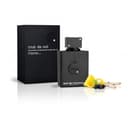
Armaf Club de Nuit Intense Man

Armaf Club de Nuit Intense Man

The most famous clone in the hobby, and deservedly so: the community consensus is that it lands remarkably close to Creed Aventus for roughly a tenth of the price. It's actually a beast on performance — arguably louder and longer than the original. If you want the Aventus smell, start here.

If the reason is price
$30.49 · View on Amazon

$43.9931% off

Price as of October 18, 2026. #ad How we’re funded

2
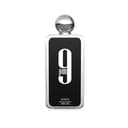
Afnan 9PM Eau de Parfum

Afnan 9PM Eau de Parfum

The budget sweet-amber the fragrance community reaches for when the whole ask is 'lasts all day, smells expensive, costs almost nothing.' A cinnamon-apple opening drops into a vanilla-tonka-amber base with the kind of reported wear that embarrasses designers several times the price.

Cheapest route to a compliment-getter
$29.00 · View on Amazon

Price as of October 18, 2026. #ad How we’re funded

3
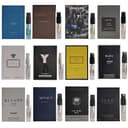
Sampler Set 12 Designer Fragrance Sample Vials

Sampler Set 12 Designer Fragrance Sample Vials

A twelve-vial designer sampler that buys breadth: the listing sells it as a collection of popular designer brands rather than a named, curated line-up, which makes it the box for mapping what you like across the designer shelf at the lowest cost per vial. Check the current line-up before you order — the listing does not name the twelve scents in its title.

If the reason is uncertainty
$26.99 · View on Amazon

Price as of October 18, 2026. #ad How we’re funded

The picks in full

#1If the reason is price

Armaf Club de Nuit Intense Man

The most famous clone in the hobby, and deservedly so: the community consensus is that it lands remarkably close to Creed Aventus for roughly a tenth of the price. It's actually a beast on performance — arguably louder and longer than the original. If you want the Aventus smell, start here.

What’s good

  • Widely reported as the closest accessible Aventus alternative
  • Enormous projection and 10+ hour longevity reported
  • Costs a fraction of the designer it's compared to

Who should skip it

  • Opening is sharper and more synthetic than the original
  • So loud that one or two sprays is the ceiling
ConcentrationEau de Toilette
Scent familyFruity chypre
Key notesPineapple, Blackcurrant, Lemon, Birch, Vanilla, Musk
Reported longevity10+ hours (community-reported)
ForMen
Reported to resembleCreed Aventus

The scent. Reported by the community as a close take on Creed Aventus — smoky-fruity pineapple and birch, with even bigger performance. A reported likeness, not a claim the two are identical.

Notes and concentration read from the product listing, on July 19, 2026. Reported performance is community consensus, not our own test.

#2Cheapest route to a compliment-getter

Afnan 9PM Eau de Parfum

The budget sweet-amber the fragrance community reaches for when the whole ask is 'lasts all day, smells expensive, costs almost nothing.' A cinnamon-apple opening drops into a vanilla-tonka-amber base with the kind of reported wear that embarrasses designers several times the price.

What’s good

  • Excellent reported longevity for a fragrance that costs about $25
  • Warm vanilla-amber sweetness that reads far more expensive than it is
  • Big projection — a genuine compliment-getter in cool weather

Who should skip it

  • Sweet and heavy — wrong for summer heat or a warm office
  • The dessert-sweet dry-down is polarizing; sample before a full bottle
ConcentrationEau de Parfum
Scent familyAmber vanilla
Key notesApple, Cinnamon, Wild lavender, Bergamot, Orange blossom, Vanilla, Tonka bean, Amber
Reported longevity8-10 hours, EDP (community-reported)
ForMen

The scent. Fragrantica classifies the 2020 release as an oriental vanilla: a spiced apple-cinnamon-lavender top over a vanilla, tonka and amber base. A strong-performing value scent in the sweet-amber lane rather than a single-scent clone.

Notes and concentration read from the product listing, on July 23, 2026. Reported performance is community consensus, not our own test.

#3If the reason is uncertainty

Sampler Set 12 Designer Fragrance Sample Vials

A twelve-vial designer sampler that buys breadth: the listing sells it as a collection of popular designer brands rather than a named, curated line-up, which makes it the box for mapping what you like across the designer shelf at the lowest cost per vial. Check the current line-up before you order — the listing does not name the twelve scents in its title.

What’s good

  • Twelve sample vials — the most range of the designer samplers we list
  • Lowest cost per scent of the twelve-vial sets in our price check
  • Small vials travel well

Who should skip it

  • The listing title does not name the scents or publish the vial size — a lucky dip compared with a curated set
  • Sample quantities only — enough to judge, not to live with
ConcentrationSample set
Scent familyAssorted designer
Key notesAssorted designer fragrances, 12 sample vials
Reported longevityVaries by vial
ForMen

The scent. Twelve designer sample vials as listed. The listing describes the contents as popular designer brands and does not name them or state the vial size in its title, so check the current line-up before ordering.

Notes and concentration read from the product listing, on September 21, 2026. Reported performance is community consensus, not our own test.

Three ways to solve the problem the discounter is solving

These are not a ranking, and they are not an argument against using a discounter. They are the three cases where the reason you were shopping one can be answered more directly.

Armaf Club de Nuit Intense Manis the answer when the motivation is purely price. It is the most-recommended Creed Aventus interpretation on the market, community-reported at ten hours and up, and it costs a fraction of what a discounted Aventus costs — with no gray-market question attached, because nobody is restricting the distribution of a thirty-dollar bottle. Our Aventus dupes page ranks the whole field.

Afnan 9PMis the answer when the motivation is wanting something that smells expensive. A spiced apple opening over vanilla, tonka and amber, eau de parfum strength, reported at eight to ten hours. Anybody weighing up a discounted designer against this should at least know the alternative exists — our under $50 list has it in context.

A twelve-vial designer sampleris the answer when the motivation is uncertainty. The single most expensive mistake in fragrance is a discounted full bottle of something you do not like — the discount is irrelevant if it sits unused. Twelve samples cost less than one discounted designer and tell you which bottle to buy at any price. Our sample sets page ranks the sets, and how to test before you buy covers doing it properly.

Frequently asked questions

Is FragranceNet legit?

It is a real, long-established retailer rather than a scam operation: its own About page describes 25-plus years in business, three warehouses, four retail stores and a catalogue of over 40,000 products, and it states plainly that it sells '100% Original' stock with 'absolutely NO imitations or knock-offs'. What you cannot get from the retailer's own page is independent verification of any individual bottle, and the structural caveats below — unboxed and tester stock, list-price comparisons, and no brand-side warranty — apply to it as they do to every discounter.

Why are fragrance discounters so much cheaper than department stores?

Three mechanisms, none of which requires counterfeiting. They buy outside the brand's authorized distribution chain — surplus, closeouts and stock moved between markets, generally called the gray market. They sell tester and unboxed units, which are genuine juice in plainer packaging that brands supply to retailers rather than to consumers. And they compare their prices against a manufacturer's list price that very little stock actually sells at.

Are the fragrances from discount sites fake?

Usually not, and counterfeiting is a different problem that mostly happens on open marketplaces with third-party sellers rather than at established discounters. The honest framing is that gray-market stock is genuine product sold through an unauthorized channel — which is why brands object to it on contractual grounds, not authenticity grounds. Chanel, for example, actively polices unauthorized sellers of genuine goods, which tells you the goods are genuine and the objection is about control.

What is a tester bottle?

A unit the brand supplies for in-store sampling: the same juice, usually in a plain white or brown box, sometimes without the decorative cap. It is not a fake and not a sample vial. Discounters sell them openly — FragranceNet's own navigation includes an 'Unboxed & Testers' category and its FAQ has an entry explaining why an order may arrive without cellophane or in a tester box. If you are buying for yourself, a tester is the cheapest legitimate version of a fragrance. If you are buying a gift, it looks like what it is.

Does '80% off retail' mean anything?

Less than it sounds. The FTC's guides against deceptive pricing are explicit that a former-price comparison is only a genuine bargain if the item actually sold at that price for a substantial period, and that 'only in the rare case are all sales of an article made at its suggested retail or list price'. A discount measured against a list price nobody pays is arithmetic, not a saving. The only comparison that means anything is the price you can actually buy the same bottle for elsewhere today.

What is the risk of buying from a discounter?

Four things, in rough order of how often they bite. Packaging: you may receive an unboxed or tester unit. Batch age: gray-market stock can be older, and an older bottle's top notes fade first. Recourse: a brand will not honor a warranty or an exchange on a bottle bought outside its authorized channel, so you are relying entirely on the retailer's return policy. And availability: the specific size or concentration you want may be the one that is out of stock, because the inventory is opportunistic rather than planned.

Should I buy expensive fragrances from a discounter?

That is where the math is most attractive and the downside is largest. On a $200-plus bottle the saving is real money, and it is also the price bracket counterfeiters target and the bracket where you most want recourse if something is wrong. If you go that route, buy from an established discounter rather than a marketplace seller, keep the packaging, and check the bottle against the brand's own photographs — our guide on spotting fakes covers what to look at.

Is there a reason to pay full price at a department store?

Three: you want the gift packaging intact, you want the brand's own return and exchange path, or you want to smell it before you commit. The last one is the only one we would pay a real premium for, and even then a sample set is usually cheaper than the price difference. Everything else is a question of how much the box is worth to you.

Sources

Keep reading