The four notes they share, and the three they don’t
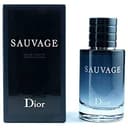
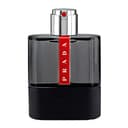
Dior publishes Sauvage Eau de Toilette as Calabrian bergamot, Sichuan pepper, lavender, ambroxan and cedar, filed as a fresh aromatic and dated to 2015. Prada publishes Luna Rossa Carbon as bergamot, pepper, lavender, metallic notes, ambroxan and patchouli, filed as an aromatic fougère and dated to 2017.
Line those up and the overlap is unusually heavy. Bergamot, pepper, lavender and ambroxan are in both. Dior names the origins of two of them — Calabrian bergamot, Sichuan pepper — which is a provenance claim about where the material came from rather than a difference you could pick out blind, and we are not going to pretend otherwise.
That leaves three materials doing all the work of telling them apart. Sauvage has cedar. Luna Rossa Carbon has patchouli and a metallic accord. Ambroxan is in both, which matters more than people realize: it is the single material most responsible for the modern clean-fresh signature, and our guide to what ambroxan actually is explains why two fragrances built on it end up feeling related even when the rest of the pyramid diverges. Only six bottles in our registry publish it at all; two of them are these.
What the metallic accord actually does
“Metallic notes” is Prada’s own published wording, not a reviewer’s metaphor, and it is the reason this comparison is worth having. A metallic or mineral accord reads cold and slightly inorganic — wet stone, struck flint, the smell of air before rain is the usual reach. Put it between a citrus-pepper opening and an ambroxan base and the result is a fresh fragrance that does not read as juicy or sweet.
That is the whole argument for the Prada. Sauvage’s dry-down is warm; Luna Rossa Carbon’s is cool. If the thing that puts you off modern freshies is that they all end up smelling faintly sweet and faintly the same, the metallic facet is the fix.
It is also the reason people return it. A note that reads as “engineered” to one nose reads as “chemical” to another, and there is no pattern to who lands where. This is the one case in this comparison where we would genuinely rather you spent a few dollars on a sample than take our word for it — a designer sample set answers it in a week, and how a fragrance behaves on your own skin affects a divisive note far more than it affects a safe one.
Performance, as reported by owners
Both are eau de toilette, so concentration is not the variable it often is in these comparisons — our guide to fragrance concentrations covers what the label does and does not promise.
Community consensus puts Sauvage at eight hours and up and Luna Rossa Carbon at six to eight. Those are reported figures, not our wear tests. The more useful difference is not the number but the shape: Sauvage is reported to project, Luna Rossa Carbon is reported to sit close. Across every mention of the Prada, the recurring phrase is that it will not fill a room.
Whether that is a strength depends entirely on where you wear it. At a desk with somebody three feet away, a fragrance that stays on you is the polite choice and the one less likely to generate a conversation with HR. Across a bar, it is the wrong tool. People who complain that Luna Rossa Carbon is weak and people who praise it for being discreet are describing the same behavior, and our guide to sillage, projection and longevity exists because those three things get collapsed into one word constantly.
Which to buy for which job
For one bottle that covers everything: Sauvage. Longer reported wear, broader seasonal range, and the lowest risk of buying something you turn out to dislike. It is the default on our best cologne of 2026 list for exactly this reason, and the honest case against it is social rather than olfactory.
For work: Luna Rossa Carbon. Closer wear, a cooler and drier dry-down, and enough character that it does not read as corporate wallpaper. It is a ranked pick on our office roundup and our men in their thirties list, and both of those recommendations are about restraint.
For spring and shoulder seasons: Luna Rossa Carbon. The mineral-green reading suits cool air better than the warm ambroxan-cedar floor of the Sauvage, which is why it sits on our spring picks.
For heat: Sauvage, narrowly. Both survive warm weather better than most designers, but bright citrus over a dry woody base is the more reliable structure at high temperatures. The summer roundup has the bottles built specifically for it.
For not smelling like everybody else: Luna Rossa Carbon, and it is not close. This is the single clearest reason to pay designer money for the Prada instead of the Dior.
What else to consider at this money
Both of these are premium-priced designers, and it is worth knowing what else that budget buys before you commit to either.
If what appeals about Sauvage is the bergamot-and-pepper opening, the line itself has two other concentrations and they are not interchangeable — Sauvage EDT vs EDP vs Elixir lays out which is which, and the eau de parfum is the third bottle in our registry that publishes all four of the shared materials above.
If what appeals is Luna Rossa Carbon’s restraint, the natural cross-shop is Luna Rossa Carbon against Bleu de Chanel, which is the other dry, grown-up office default — and Sauvage against Bleu de Chanel completes the triangle if you are weighing all three.
And if the honest answer is that you mostly want the lane rather than the label, the under-$50 shelfgets you a long way into fresh-spicy territory for a fraction of either price. It will not get you the metallic accord, because almost nothing does — which is the one thing on this page the value houses cannot hand you cheaply.