The short answer
Ambroxan is a synthetic aroma materialthat stands in for ambergris — the rare substance that comes from the digestive system of sperm whales and was once collected off beaches and sold for thousands of dollars per pound. It was first synthesized in 1950 and marketed as Ambrox by Firmenich, and it is made from sclareol, a compound found in the essential oil of clary sage.
It matters to you for one reason: it is in an enormous proportion of modern men’s fragrance, including six of the bottles in our own registry. If every fresh designer on the shelf smells faintly related to you — and a lot of people say exactly that — this is the most likely reason.
What it replaced, and why
Ambergris is strange stuff. It originates in the digestive system of sperm whales, is expelled, and floats around the ocean until it washes up — which earned it the nickname “floating gold” and prices in the thousands of dollars per pound. Perfumers prized it because it did something almost nothing else does: it added warmth and depth and made everything around it last longer, without smelling loudly of itself.
Two problems ended its commercial life. It was absurdly scarce and expensive, and it comes from an endangered animal. The United States has banned its use since 1972, though it has remained in use in some other markets, including France.
So the industry built a replacement. Ambroxan provides an ambergris-type effect from a lab rather than a beach, at a price and a consistency that a global supply chain can actually work with. That is the whole story of why it is everywhere: not fashion, but the fact that the natural material it imitates is functionally unobtainable.
Where it comes from now
The traditional route starts with clary sage. Its essential oil contains sclareol, a diterpene compound, which is chemically converted into the finished material. The limitation is supply: clary sage produces sclareol only in small quantities, and the compound is difficult to process and purify, which is why the material has never been as cheap as its ubiquity suggests.
The newer route is biotechnology. Givaudan produces its version, Ambrofix, by fermenting sustainably sourced sugarcane. The company describes Ambrofix as “one of the most widely used biodegradable fragrance ingredients,” says the fermentation route is 100 percent naturally derived with “identical olfactive qualities to the traditional method,” and states that it requires 100 times less land to make a kilogram than traditional production does.
Worth noticing what that means for the marketing you read. A fragrance built on this material can legitimately be described as nature-derived and biodegradable while being, in the ordinary sense of the word, synthetic. Both descriptions are accurate. Neither tells you anything about whether you will like it.
What it actually smells like
We are going to be careful here, because this is where fragrance writing usually starts inventing.
The community consensus — and we are labeling it as consensus rather than fact — describes ambroxan as warm, dry, faintly salty and skin-like, with a woody-ambery quality and very little sweetness. It is more often described in terms of what it does than what it is: it makes a fragrance feel closer to the body, and it keeps a bright composition going after the citrus has burned off.
Three things complicate that description, and all three are more useful than the description itself.
Some people cannot smell it well. Reduced sensitivity to specific aroma materials is well documented, and ambroxan is one of the materials it gets reported for most. If an ambroxan-heavy fragrance seems to disappear on you within an hour while other people insist they can smell it, the bottle may be fine and your nose may simply not be registering the base. That is a genuinely common and genuinely confusing experience, and it is covered further in why you cannot smell your own cologne.
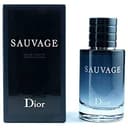
A minority find it harsh. The single most common criticism of Dior Sauvage is that its ambroxan-forward dry-down reads synthetic, and that criticism is about this material specifically rather than about the composition around it. If you have disliked several modern fresh designers for reasons you could not name, this is the first suspect.
It is not a smell you buy for its own sake.Nobody chooses a fragrance because of its ambroxan the way they might choose one for vanilla or oud. It is structural — a floor rather than a feature. Our notes guide explains why base materials shape your experience of a fragrance far more than the opening you bought it on.
Why it took over the designer aisle
Fresh fragrance has one structural problem: the materials that smell bright are the materials that evaporate fastest. Citrus oils and marine accords are gone in under an hour, which is fine for a traditional eau de cologne designed to be reapplied and useless for a modern bottle expected to last a working day.
The conventional fixes all cost you something. Add vanilla or amber for weight and the fragrance stops reading fresh. Add heavy woods and it reads formal. Add musk and it can read soapy. Ambroxan is substantive without being sweet, which means it extends a bright composition without redirecting it — and it is cheap and consistent at industrial scale.
Dior Sauvage made that combination a commercial template in 2015 and became the default men’s fragrance of the following decade. The industry drew the obvious conclusion. Which is why the fresh categoryhas a family resemblance that goes beyond coincidence, and why the complaint that “everything smells the same now” has a specific technical cause rather than being pure nostalgia.
How to use this when you shop
Three practical consequences, which is the point of knowing any of this.
If you have liked several fresh designers, look for it on the note list.It is a reliable signal that a bottle will behave the way the others did — warm and close after the opening, with decent wear for a light fragrance.
If you have disliked several of them, look for it too, and avoid it. Six registry bottles publish it, named in the answers below; a fragrance built on woods, vetiver or citrus without it will behave noticeably differently. The scent families guide is the map for finding those.
Do not pay designer money for it specifically.It is in value-house bottles at a fraction of the price, doing identical structural work. What you pay a designer for is the composition on top of it — which can be worth it, but is a different purchase from buying the base. Our dupes argument covers that trade honestly, and why cologne is so expensive breaks the price down further.
One last piece of vocabulary, because this is where it gets mixed up most often: ambroxan is not amber. Amber is a built accord of resins, vanilla and balsams with its own shelf of fragrances, and it comes in four fairly distinct kinds. Best amber colognes sorts them out and ranks eight bottles across the lanes, including the two that use ambroxan instead of resin to do the warming.