One good bottle is enough for most men. Three covers almost every situation you will meet in a year: a versatile daily scent, a warm one for cold weather and evenings, and a fresh one for heat. Past five or six you are collecting — which is a perfectly good hobby, but it is not something anybody needs.
The question usually hides another: am I doing this wrong with one bottle, or wasting money with ten? Probably neither. Below is where one bottle stops working, what each of three slots should do, and how to fill them without blind-buy mistakes. The picks come last, because the slot matters more than the specific bottle.
Why one bottle is enough
A single versatile fragrance, worn well, does the job most men actually want from fragrance: making you smell like somebody who made an effort. Nobody around you is tracking whether you wore the same scent yesterday. A well-chosen daily scent — fresh or fresh-woody, moderate projection, nothing polarizing — is appropriate at work, at dinner and at a wedding, and one bottle of it lasts a long time.
If you own one and you are happy with it, you are done. There is no rule that says you need a wardrobe.
Where one bottle runs out
A single scent has three limits, and they are the only good reasons to own a second.
Heat
Warm air and warm skin push fragrance off you faster and louder. A scent that is pleasant in October can turn cloying on a humid July afternoon, especially anything built on vanilla, amber or spice. If your one bottle leans warm, summer is where it lets you down.
Evenings and cold weather
The reverse problem. Cold suppresses how much scent lifts off your skin, so a light fresh scent that works at a desk can all but vanish at an outdoor dinner in December. And some occasions simply suit something warmer and richer than an office scent.
Nose blindness
Wearing the same fragrance every day produces the strongest nose adaptation. You stop noticing it on yourself while everyone around you still does — which is how daily-signature wearers drift from two sprays to five. Alternating between two or three scents is the simplest way to keep each one perceptible. Our guide to why you cannot smell your own cologne explains the mechanism and how to check whether your scent is still there.
The three-bottle rotation
If you want more than one, three is the number that covers almost everything. Think of them as slots rather than bottles: each does a job the other two cannot. The three things to judge each candidate on are scent family, concentration and how far the scent reaches — our guides to scent families and sillage, projection and longevity explain those terms properly.
Slot 1: the daily driver
The bottle you reach for without thinking, four or five days a week. It has to work at a desk, at lunch and into the evening, in most seasons.
- Family: fresh, aquatic-aromatic or fresh-woody. Clean rather than sweet.
- Concentration: an eau de parfum, or an eau de toilette with good reported longevity. It should last a working day without a top-up.
- Projection: moderate. Noticeable at conversation distance, not across a meeting room.
Slot 2: the cold-weather bottle
For winter, evenings, dinners and anything where you want warmth and a little more presence.
- Family: ambery, gourmand or woody-spicy — cinnamon, vanilla, tobacco, dates, amber.
- Concentration: eau de parfum is typical and it helps, because cold air mutes scent.
- Projection: more is acceptable here, since this bottle stays out of the office. The risk is over-application: dense, warm scents are usually two-spray fragrances.
Slot 3: the hot-weather bottle
For summer, holidays, the gym bag and any properly hot day.
- Family: aquatic, citrus or green — marine notes, bergamot, neroli.
- Concentration: an eau de toilette is fine and often better. A lighter concentration wears more comfortably in heat, and a lunchtime top-up of a fresh scent is no hardship.
- Projection: light to moderate. The heat does the projecting for you.
If your daily driver is already quite fresh, slots 1 and 3 can overlap for part of the year. That is fine — the point is coverage, not symmetry.
A fourth or fifth slot, if you want one
Beyond three, additions are about preference rather than need. Two are genuinely useful.
The quiet office scent
If your daily driver carries enough to be noticed in a shared room, a deliberately close-wearing scent for long meetings, flights and small offices earns its place. Soft musks and restrained woody aromatics are the usual lane.
The statement scent
Something distinctive you keep for occasions — a wedding, a big dinner, a night you want to remember. This is the one slot where an expensive or niche bottle makes the most sense, because you are buying character rather than versatility.
Stop there. Five slots covers everything a working wardrobe needs, with room to spare.
Why more bottles is not better
Bottles last a long time. A full bottle worn daily already takes a long while to finish; spread your wear across ten and each one gets worn a few days a month. Meanwhile the clock is running. A well-stored opened bottle typically stays good for three to five years and often longer, but heat, light and air all shorten that. Our shelf-life guide covers the signs that a bottle has turned.
You will wear two. Ask people with a big shelf and you often hear the same thing: they reach for the same two or three bottles and leave the rest. That is not a failure of discipline; it is what a favorite is. The bottles you do not wear are money on a shelf, slowly getting worse.
Duplicates hide in plain sight. A familiar version of the too-big collection is not ten different scents. It is four fresh blue designers all doing the daily-driver job. More bottles in the same slot is not range.
How to build it without blind buying
Do not fill three slots with three blind buys. The order that works is simple: settle the daily driver first, since it gets the most wear, then add whichever slot your life needs next — cold weather if you have real winters, hot weather if you do not.
And sample before every full bottle. A vial lets you wear a scent for a full day, which is the only honest test of whether you still like it at hour six rather than minute one. Our signature scent guide lays out a four-week method for turning a box of samples into a bottle you actually chose, and the same method works slot by slot. The rest of our fragrance guides cover testing, application and storage once you have your three.
The three slots, filled
Below is one example bottle per slot, plus the sampler that lets you test before committing.
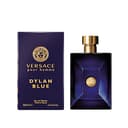
The daily driver: Versace Dylan Blue. A bergamot-and-ambroxan aquatic with a musky, faintly incense-like base, launched in 2016 and community-reported at seven to eight hours. It fits the brief almost exactly: fresh without being sweet, versatile across seasons, and at home in daylight and at night. The honest caveat is that it sits firmly in the fresh blue family, and some noses find the base a touch synthetic.
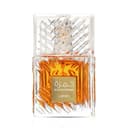
The cold-weather bottle: Lattafa Khamrah. A warm, boozy cinnamon, dates and vanilla gourmand at eau de parfum strength, community-reported at nine hours or more. Be clear about what it is: a value-house scent the community places in the lane of Kilian Angels’ Share — a reported likeness, not an identical copy. Its huge popularity has made it a familiar smell, and it is too heavy and sweet for summer or an office, which is exactly why it belongs in this slot and not the first one.
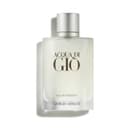
The hot-weather bottle: Acqua di Gio EDT. The 1996 aquatic that defined the genre: marine notes, bergamot and neroli over light woods. It is extremely common and community-reported at five to six hours, so expect to reapply on a long day. In this slot that trade is acceptable, because a light eau de toilette is what you want in heat.
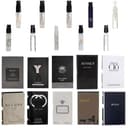
How to choose the three: a ten-vial designer sampler. These are sample sizes, not bottles — a few wears per vial — and the line-up varies by listing, so check what is inside. It is here because the right daily driver for you may not be Dylan Blue, and a week of vials is how you find out before paying for a full bottle. In our September 17, 2026 price check, the sampler and Khamrah both sold for under $50.